

Know our story
From a hostel in Bogotá to raw material sourcing across 86 countries — the chapters that shaped PINPOOLS.
Before PINPOOLS, there was a farm in Amelunxen.
We grew up on a farm in a village called Amelunxen, which had 1,000 inhabitants. The farm had 35 milk cows, ten bulls, and 250 pigs. When a cow was calving, it was always a big event with lots of tension — as not every birth went well.
Having our own dog, chickens, peacocks, and pigeons was part of the freedom in our life. Feeding them every day, taking care of their health, bringing fresh straw — this work shaped how we think about responsibility, resilience, and building something real.
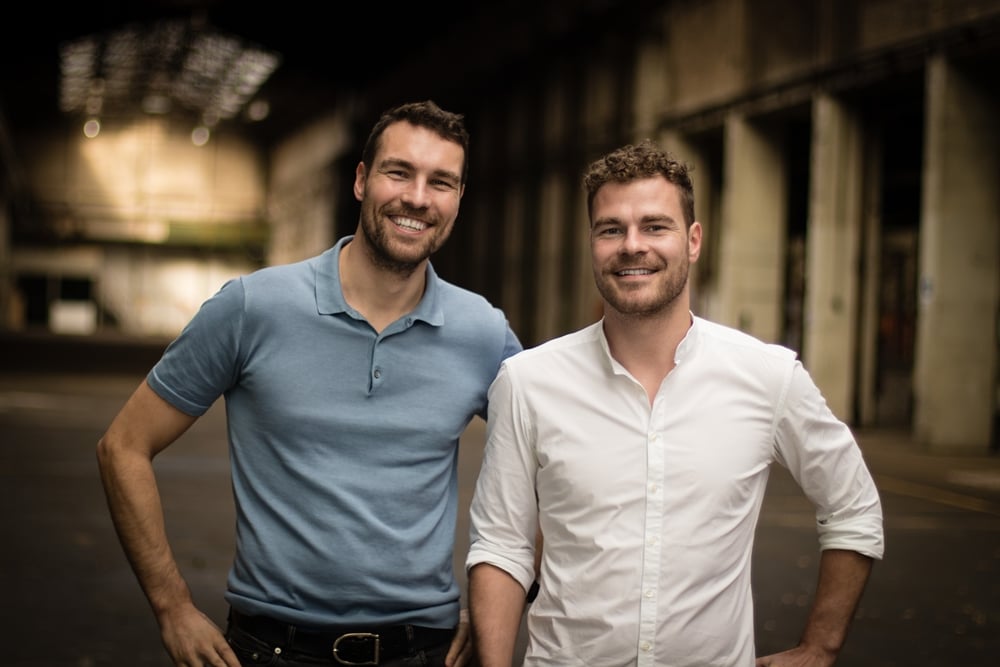
Summer 2016. Herri and I met again in a hostel in Bogotá, Colombia. Herri was studying there for a semester; me and some friends went to visit him and take a trip through the Sierra Nevada — a glacier climb, then the beaches of Costeño and Cartagena. That’s where the idea for a matching platform for B2B raw materials was born. Inspired by Pinterest — “pin” your favorite products in “pools” of suppliers. The name PINPOOLS was born.
During one of our first pitches in 2016 to expert chemists at the University of Cologne, most of the audience agreed we were going to fail. You could summarize it as: “No one will ever buy an IBC digitally.” The top reasons why chemical eCommerce would never happen: “we are too special, our products are too special, we are too global, we are too local.” That evening I took a shower and felt like a tank had run over my body.
“This will NOT work: monopoly supplier landscape, already failed in the dotcom era, I’ve been doing this work 30 years with good relationships and phone contacts, my customer wants personal contact, I’m the best buyer and have already optimised everything…” — the list could go on. Every piece of resistance motivated us further that this was the right decision. There was no other way.
We tried to attract our first suppliers to put their offers on PINPOOLS. Tough work. Every call felt like a single bullet to convince owners and CEOs that digitization isn’t a threat — it’s an opportunity for those who take it. Some picked up and hung up. Some invested nothing and expected exponential growth. Step by step, cold call by cold call, we convinced one user after another.
We built great friendships with valuable mentors during our first pitch events. They sincerely believed in digitalization and the great potential it could bring to the industry. Sharing the same vision was like strong glue. One of them said to us: “Guys, you have to go out and earn money from it.” From that moment on, we focused only on features and services customers found extremely useful — and were willing to pay for.
Over the past years we’ve been steadily moving at a three-digit percentage per year, and our way will certainly take us a few more years. We’re here to stay. We’re convinced we have reached only 1% of what we can achieve in the near future. Making a real impact and difference in our industry is what drives our motivation.
The old economy meets one reality.
Founding our first company in the plastic production industry and transitioning to one of the digital global leaders in raw material sourcing was a natural success. Taking our clients’ challenges and making them more reliable than before — that’s what we do.
Customer-centric always
We develop the product to directly meet customer needs — not just current challenges, but foreseen future ones. Becoming a real partner is the most prestigious level we believe we can achieve.
Data over opinion
We publish transaction-based benchmarks — not surveys, not consultant estimates. When we can’t prove a number, we say so.
Small mistakes, fast learning
We made mistakes easily because we couldn’t afford to do things wrong for too long. Every mistake was small, cheap, and part of the way we adjust strategy at every new level.
Becoming the most customer-centric company in the chemical procurement industry on this planet is our motivation and promise for the future.